
Do it with ease, clarity, and certainty. (Beware: I had a friend who once who prayed for a lot of money. He was successful. He got it in a car accident insurance settlement, but also had to live with hideous pain for the rest of his life.)
Creating
Energy flow follows simple rules of physics that you can control. As you should know there is an infinite amount of energy in the universe and you can command, direct, control, create and destroy it as you wish. This, in itself, is a God-like power.
One has to remember there is no ethics in spiritual matters. Some people are good and others are, in fact, hurtful or evil. You have to choose what ethics you will abide by and how you deal with others not sharing your code of behavior.
Everyone uses energy to protect themselves, to further their creations, to control their environment and influence others. Some, however, are better, i.e. more skilled, at it than others. This often creates conflict and competition, yet you can choose not to play their games, and instead choose your own.
The first step is to understand you have your own energy universe made up of your body and your personal space (aura). This is yours! And, you should take care of it.
You can change the energy in your body and aura at will. I would do so by creating energy in affinity with your body and goals and, then, bring it into your space to replace the energy you do not want. Your intention to do so, makes it happen! Your ritual practice is your opportunity to realign your energy with your conception of God’s energy.
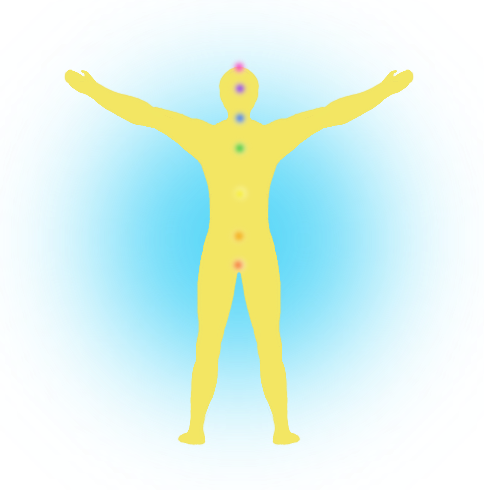
I begin by “grounding” my body and aura from the first charka at the base of the spine. This grounding cord is a chute where I can dump all of my unwanted energy in my body and aura deep into the ground (similar to a lightning rod).This anchoring tool also helps define my personal space and will help keep me safe. It can be, and should be used, all of the time. Refresh your grounding cord often by destroying the old one and creating a new one.
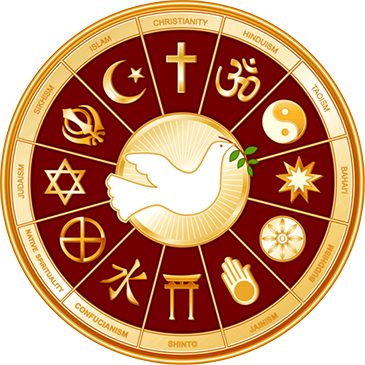
Then, choose the energy’s flow, or pattern, in your personal space. Remember to direct it through all of your body and aura. Create a pattern of doing so during your ritual practice. This pattern will become second nature to you, so you can use it at any time and in any circumstance. Many religious traditions teach different patterns in this flow of energy. Choose one and practice it.
For example, I direct energy, that I have made my own, to flow from my crown charka (top of my head) downward though my charkas to my first charka (at the base of my spine) and then upward through all of my charkas and out of the top of my head and into my aura, with some splitting off into my arms and out my hands. Using this pattern I can clear out my charkas and body of all the energy that does not serve me while replacing it with energy that does.
I also bring up earth energy, in affinity with my body, up thorough my feet charkas and through my legs to my first charka where is will mix with the energy explained in the previous paragraph and dump it down my grounding cord.
Since I am the master of all that I create, I can change my energy even more quickly by also creating a symbol outside of my aura to “pull out” energy I do not want from my space. By exploding this symbol you will return the energy to the universe. Again, you need to remember to replace the energy you have removed with the energy you do want. To do so, gather up some energy and make it your own, with the qualities you want, and bring it into your personal space. Again, if you do not replace the depleted energy, your body will sense a vacuum and recreate the energy it “knows,” i.e. the energy you just removed. So, fill up your space with your energy and own it!
Finally, you can also use a symbol of your own creation to protect your space from unwanted energy directed at you. This tool will get “hammered” over time, so it will have to be destroyed, then, updated and replaced. You can also use this tool give you a warning of what energy is being sent your way. Don’t use this symbol to block all energy, you still want to experience life.
These tools, or techniques, are useful in changing (healing) your energy. They, however, need to be refreshed periodically because just like any other tools, they will show signs of wear and tear. In my ritual practice I recreate these techniques, “in present time,” for my use in every new moment. I can, also refresh these tools at any time as the need arises.
The percentage of the mixture of earth energy flowing with your chosen universe’s energy in your upper body should be explored by you. Native Americans, often, run a lot of earth energy in their body. This makes them “heavy” and more earth-bound. Asian meditation techniques, however, often forget about the feet and legs when directing their energy. Discover what works for you. Any “surplus” energy can, of course, be eliminated through your grounding cord.